What Happens During a Routine Dental Exam?
Most people know they are supposed to see a dentist twice a year, but a surprising number of patients walk into that appointment without really knowing what is going to happen once they sit down in the chair. That uncertainty is one of the biggest reasons people put off scheduling in the first place. Once you understand what a routine exam actually involves, it stops feeling like a mystery and starts feeling like what it really is: a quick, low-stress checkup that protects your health and your wallet.
This guide walks through a typical visit from start to finish, so you know exactly what to expect the next time you book an appointment.
Why Routine Exams Matter More Than You Think
A dental exam is not just about spotting cavities. Your mouth is connected to the rest of your body, and dentists are often the first healthcare providers to notice early warning signs of conditions like diabetes, acid reflux, vitamin deficiencies, and even certain autoimmune disorders. Regular exams give your dentist a chance to catch small issues before they turn into painful, expensive problems.
There is also a financial angle that gets overlooked. A small cavity caught early might mean a simple filling. The same cavity left unchecked for a year or two could mean a root canal or a crown. Routine visits are, in a very real sense, a form of prevention that saves both money and discomfort down the road.
Checking In: What Happens Before You See the Dentist
When you arrive for your appointment, the front desk will usually confirm your insurance information and any updates to your medical history. If you have started a new medication, been diagnosed with a new condition, or had surgery since your last visit, this is the time to mention it. Medications and health changes can affect your gums, your saliva production, and even how your mouth heals, so this information matters more than people realize.
From there, a dental hygienist or assistant will usually bring you back to a treatment room and get you settled in before the dentist comes in. This part of the visit typically takes just a few minutes.
The Visual Examination: What Your Dentist Is Looking For
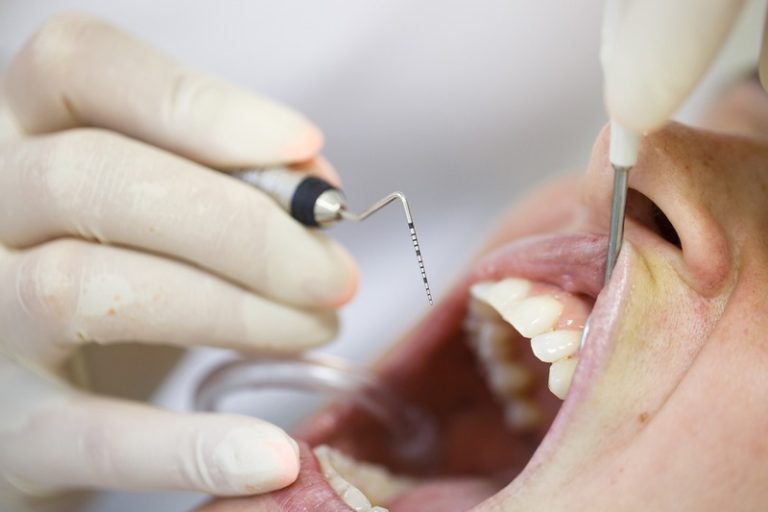
Once you are in the chair, the dentist or hygienist will do a visual and physical examination of your teeth, gums, tongue, cheeks, and the roof and floor of your mouth. They are checking for a long list of things: visible decay, cracked or worn teeth, signs of grinding, discoloration, sores that have not healed, and any changes since your last visit.
Many dentists use a small mirror and a metal instrument called an explorer to gently check the surfaces of each tooth. This helps them feel for soft spots or rough patches that might indicate early decay, even before it would show up as a dark spot or a hole.
Small-town practices tend to take a more personal approach to this step. A dentist who has been treating the same families for years often notices subtle changes that a first-time provider might miss, simply because they know what your mouth looked like six months or a year ago. Practices like Gnadenhutten’s Tusc Family Dental have built their approach around this kind of continuity, treating patients as individuals rather than rushing through a checklist.
Digital X-Rays and Why They Matter
Not every visit includes X-rays, but many routine exams do, especially if it has been a while since your last set or if your dentist wants to check something that is not visible to the naked eye. Digital X-rays use a fraction of the radiation of older film-based systems and produce images almost instantly, which means less waiting around and less exposure overall.
X-rays let your dentist see between teeth, below the gumline, and inside the jawbone. This is how they catch decay hiding between teeth, check the health of tooth roots, monitor bone levels around your teeth, and keep an eye on things like impacted wisdom teeth. Without X-rays, a significant amount of what is happening inside your mouth would simply stay hidden until it became a bigger problem.
Screening for Oral Cancer
An oral cancer screening is a routine part of most dental exams, and it only takes a minute or two, but it is one of the most important things that happens during your visit. The dentist will look at and gently feel the tissues in your mouth, your neck, and under your jaw, checking for lumps, discoloration, or unusual patches that could indicate a problem.
Oral cancer is far easier to treat when it is caught early, and because early signs are often painless and easy to miss on your own, this screening is one more reason routine visits matter even when you feel completely fine.
Checking Your Gums and Bite
Your dentist or hygienist will also check the health of your gums, sometimes using a small measuring tool to check the depth of the space between your teeth and gums. Deeper pockets can be a sign of gum disease, which if left untreated can eventually lead to tooth loss and has been linked to other health issues throughout the body.
Your bite gets checked too. The dentist wants to see how your upper and lower teeth come together, whether there is any unusual wear, and whether your jaw makes any clicking or popping sounds that could point to issues with your jaw joint.
The Cleaning Portion of Your Visit
For most patients, the exam is paired with a professional cleaning, and this is usually the part people are most familiar with. A hygienist uses special tools to remove plaque and tartar buildup, especially in spots that are hard to reach with a regular toothbrush and floss at home. Tartar hardens over time and cannot be removed with brushing alone, which is exactly why this step matters even for people with great home care habits.
After the scaling is done, your teeth get polished, which removes surface stains and leaves your teeth feeling noticeably smoother. Some offices finish with a flossing step to clear out any remaining debris between teeth. Altogether, a routine exam and cleaning visit usually takes somewhere between thirty minutes and an hour, depending on how much buildup there is and whether X-rays are part of that day’s appointment.
Fluoride Treatments and Extra Steps
Depending on your age, your risk for cavities, and your dentist’s recommendation, you might also get a fluoride treatment at the end of your cleaning. Fluoride helps strengthen tooth enamel and can lower your risk of decay, and it is applied quickly, usually as a gel, foam, or varnish that sits on your teeth for a few minutes.
Some patients, particularly kids or people with a history of cavities, might also be candidates for dental sealants, which are thin protective coatings applied to the chewing surfaces of back teeth. Sealants create a barrier against the bacteria and food particles that cause decay in those deep grooves.
Talking Through Your Results
Once the exam and cleaning are finished, your dentist will usually sit down with you to go over what they found. This is your chance to ask questions, whether that means asking what a certain X-ray finding means, what treatment options look like for an issue they spotted, or simply how your oral health compares to your last visit.
A good dentist explains things in plain language rather than burying you in clinical terms you have to look up later. If something needs attention, whether it is a cavity, a cracked filling, or early signs of gum disease, this is when treatment options and next steps get discussed, along with a rough idea of timing and cost.
How Often Should You Schedule a Routine Exam?
Most dentists recommend a checkup and cleaning every six months, though your personal schedule might look different depending on your oral health history. People with a history of gum disease, frequent cavities, or certain medical conditions might be advised to come in more often, while patients with excellent oral health and low risk factors might be able to stretch that interval slightly.
The best way to figure out the right schedule for you is to ask your dentist directly during your visit. They know your history and can tell you what interval makes sense for your specific mouth rather than relying on a generic rule of thumb.
What to Do If a Problem Turns Up Between Visits
Routine exams catch a lot, but dental problems do not always wait politely for your next scheduled appointment. A cracked tooth, a lost filling, or sudden, sharp pain can show up with no warning at all. When that happens, it helps to already know which local practices offer same-day emergency dental appointments, since a fast response can make the difference between a simple fix and a much bigger, more painful procedure.
Keeping a dentist’s number on hand for these situations, rather than scrambling to find one while you are in pain, is one of the simplest ways to protect yourself between checkups.
Finding a Dental Home You Trust
A routine exam works best when it is not just a one-time transaction but part of an ongoing relationship with a dental team that knows your history. Consistency matters here. A dentist who sees you year after year is far better equipped to notice small changes, track patterns, and give advice that actually fits your life rather than a generic recommendation.
If you have been putting off a checkup because you were not sure what to expect, hopefully this rundown makes the process feel a lot less intimidating. A routine exam is quick, straightforward, and genuinely one of the easiest things you can do for your long-term health. Finding a dental team you feel comfortable with, one that explains things clearly and treats you like a person rather than a number, makes it that much easier to keep those appointments on the calendar.